
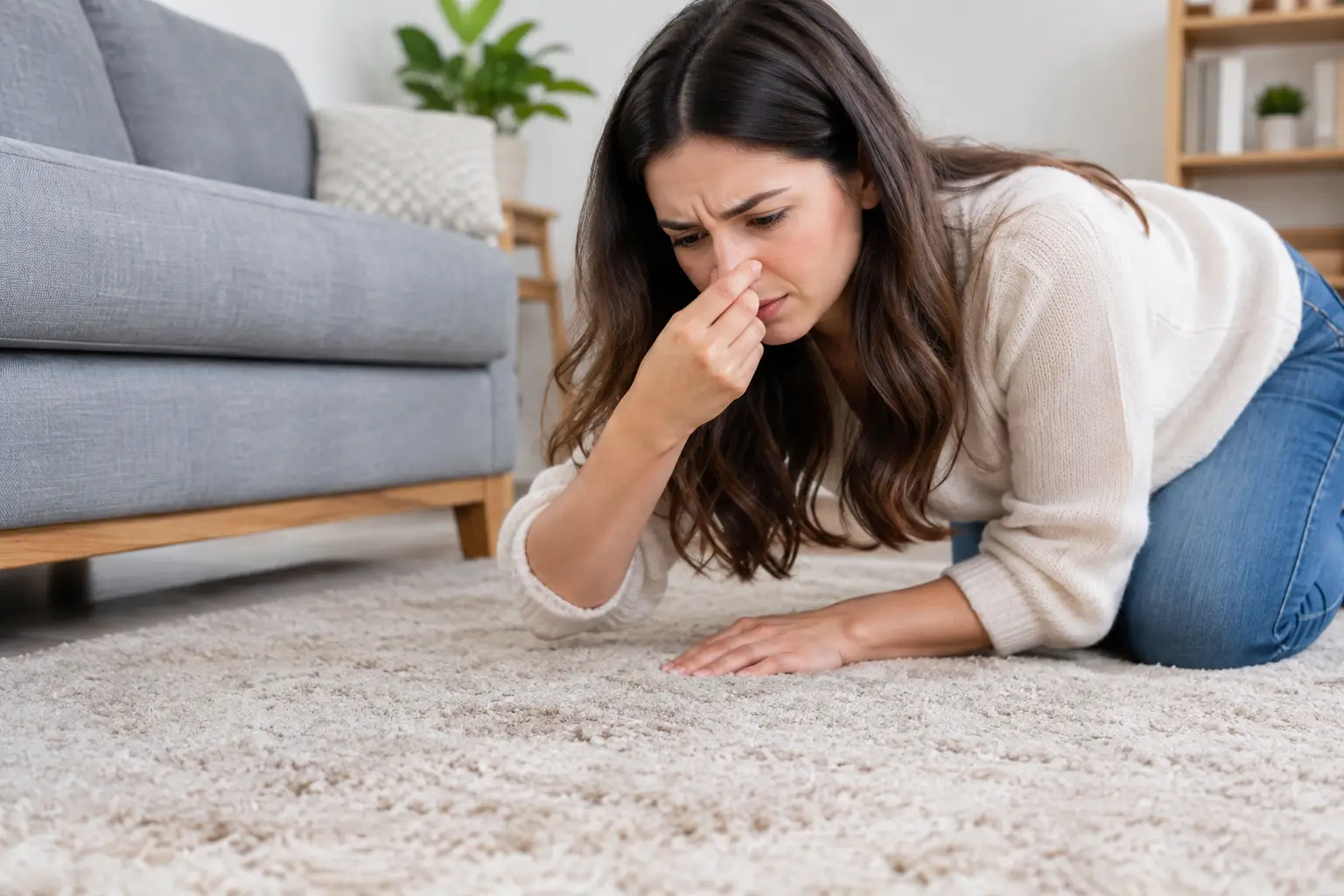
Why Carpets Smell and What the Odor Means
A carpet can look clean and still make a room smell off. That is why carpets smell after pets, spills, wet weather, busy family life, or even a routine cleaning that did not dry fully. The odor is usually not coming from the carpet fibers alone. It often comes from what has settled deep in the pile, backing, pad, or subfloor.
For Edmonton homeowners and renters, finding the source matters more than covering the smell with fragrance. Air fresheners may make the room seem better for an hour, but they do not remove the material causing the odor. The right solution depends on whether the problem is surface-level, moisture-related, or embedded below the carpet.
Why Carpets Smell After Everyday Use
Carpet acts like a filter in a busy home. It catches dirt, dust, skin cells, food crumbs, pet hair, oils, and outdoor debris that comes in on shoes. Regular vacuuming removes loose material near the surface, but it cannot always pull out the particles that settle lower in the carpet.
Over time, those materials can develop an odor, especially in high-traffic areas such as hallways, living rooms, stairs, and bedrooms. A room may smell stale or dusty when the heat turns on, when windows stay closed, or when people walk across the carpet and disturb trapped particles.
Homes with children and pets tend to see this sooner, not because the home is unclean, but because daily life brings more moisture, tracked-in soil, and small spills. Even a carefully maintained carpet eventually needs a deeper clean to remove what vacuuming leaves behind.
Pet accidents and pet oils
Pet urine is one of the most common causes of persistent carpet odor. A fresh accident may be easy to spot, but urine can move beyond the visible area. It may soak through the carpet and reach the backing or pad, where bacteria and odor-causing residue remain.
As the area becomes humid or damp, the smell can return. This is why a carpet may seem fine for weeks, then suddenly smell stronger after rainy weather, steam from a shower, or a humidifier running nearby.
Pet oils can also contribute to a general animal smell, especially where pets sleep, lie on the carpet, or come inside after being outdoors. A standard household cleaner may improve the surface, but it may not fully address residue deeper in the carpet.
Food, drinks, and organic spills
Milk, coffee with cream, juice, soup, sauces, and other food spills can leave behind organic material even after the visible stain is gone. If cleaning only removes the color but not the residue, bacteria can feed on what remains and create a sour or musty odor.
Older spills are often harder to identify because people no longer remember where they happened. A smell that seems to come from the whole room may actually be concentrated in one small area near a sofa, dining table, child's room, or favorite sitting spot.
Musty Carpet Smells Usually Point to Moisture
A musty smell deserves attention because it often means the carpet has stayed damp too long. The source could be a spill, a leaking appliance, a wet basement, snow tracked in during winter, a plumbing issue, or a carpet that was cleaned but did not dry properly.
Moisture creates the conditions that mold and mildew need to grow. The odor may be strongest near walls, under furniture, along basement edges, or in areas with poor airflow. Sometimes the carpet surface feels dry while the pad underneath is still damp.
Do not assume a musty odor will disappear on its own. If there is an active leak, flooding, or visible mold, the first step is to stop the moisture source and assess the affected materials. Cleaning a carpet without correcting the water problem can allow the smell to return.
When a recently cleaned carpet smells worse
A carpet may smell stronger for a short time after cleaning because moisture can reactivate old residue and bring trapped odors closer to the surface. That does not always mean the cleaning was unsuccessful. In many cases, the odor fades as the carpet dries completely.
However, a sour or mildew-like smell that continues after full drying can indicate too much moisture, insufficient extraction, or an underlying issue in the pad or subfloor. Good airflow matters after any carpet cleaning. Open windows when weather allows, use fans, and keep the room comfortably ventilated until the carpet is dry.
Drying time depends on carpet thickness, humidity, ventilation, soil level, and the cleaning method used. Thick carpet and heavily soiled areas can take longer. Walking on damp carpet or placing furniture back too quickly can slow the process and create new problems.
Smoke, Cooking, and Household Odors Can Settle In
Not every carpet odor starts with a spill. Tobacco smoke, fireplace smoke, cooking odors, candles, and strong household fragrances can settle into carpet fibers along with dust and oils. The longer these odors remain, the more they can become part of the room's overall smell.
Cooking odors are especially common in open-concept homes where the kitchen, dining area, and living room share the same air. Grease particles can travel farther than expected and cling to carpet, upholstery, curtains, and walls.
This kind of odor often responds well to thorough carpet cleaning, but the result depends on the amount of buildup. If smoke or grease has affected several surfaces, cleaning only the carpet may improve the room without removing every source of the smell.
What You Can Do Before Calling a Professional
For a small, fresh spill, act quickly. Blot the area with a clean white towel instead of rubbing it, which can push the spill deeper and spread it outward. Use a small amount of water or a carpet-safe cleaner, then blot again to remove as much moisture as possible.
Avoid soaking the carpet. More product is not always better, and excess water can create the very moisture problem you are trying to avoid. Test any cleaner in an out-of-the-way spot first, particularly on darker, patterned, wool, or delicate carpet.
Regular vacuuming also helps control everyday odors by removing dry soil, hair, and dander before they settle in. Pay extra attention to entryways, pet areas, and spaces where family members spend the most time. Vacuum slowly enough for the machine to lift debris rather than making one quick pass.
Baking soda may reduce mild surface odors for a short time, but it is not a reliable answer for urine, old food spills, smoke residue, or moisture below the carpet. It can also be difficult to remove completely from dense carpet if too much is used. If an odor comes back after basic care, that is a sign the source is still present.
When Professional Carpet Cleaning Is the Better Choice
Professional cleaning is useful when an odor is persistent, widespread, or tied to a known spill or pet accident. Trained technicians can evaluate the carpet condition and use cleaning methods designed to remove embedded soil and residue while extracting moisture effectively.
The goal is not to add a stronger scent. It is to remove the material that causes the smell. For pet-related odors, that may require treating affected areas rather than treating only the visible stain. For general stale odors, a deep cleaning can remove the dirt and oils that have built up over time.
There are limits to any cleaning service. If urine has deeply saturated the pad or subfloor, if water damage has caused mold growth, or if carpet backing has deteriorated, additional repair or replacement may be needed. An honest assessment is better than a temporary promise.
Riccardos Carpet Cleaning provides Edmonton-area customers with professional carpet cleaning using eco-friendly, non-toxic products that are safe around people and pets. With fair pricing and no hidden fees, the focus is on restoring a cleaner, fresher-feeling home without unnecessary complications.
Preventing Carpet Odors From Returning
The best prevention is consistent care and fast attention to moisture. Use mats at exterior doors, remove shoes when possible, vacuum high-traffic areas regularly, and address pet accidents or spills as soon as they happen. During winter, keep wet boots, snow, and slush from sitting on carpet near entrances.
It also helps to keep indoor humidity at a reasonable level and make sure bathrooms, laundry rooms, and basements have good ventilation. If a room repeatedly smells musty, look beyond the carpet. A leak, damp wall, clogged drain, or poorly ventilated area may be contributing to the problem.
A clean carpet should make a room feel comfortable, not leave you wondering what is hiding under the surface. When the smell lingers, treat it as useful information. Finding the cause early can protect your carpet, improve the feel of your home, and make the next step much simpler.


Comments